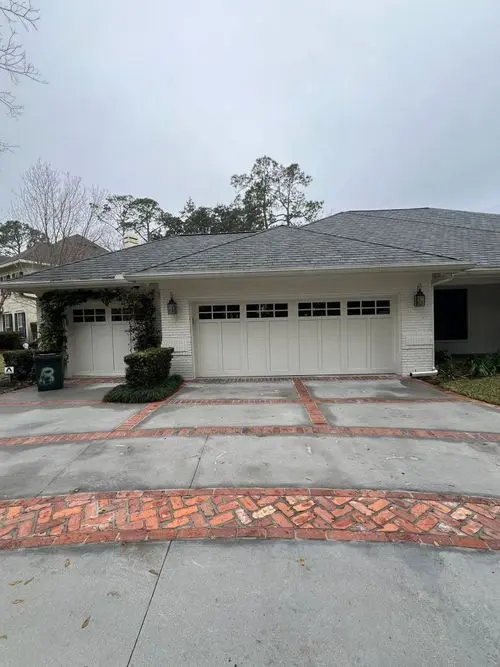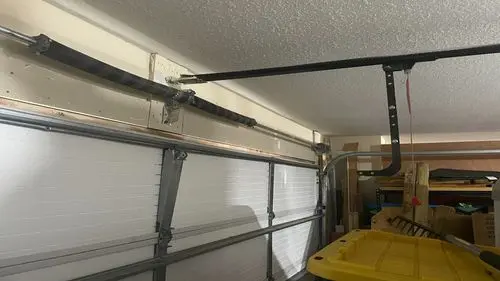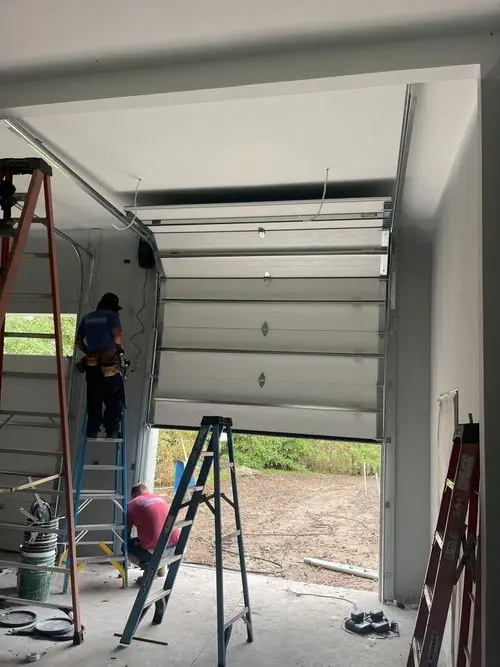
It is 7:10 on a humid Jacksonville morning, and your garage door starts with a scrape that was not there last week. The door still opens, so it is tempting to back out, promise yourself you will listen tomorrow, and forget about it by lunch.
We are America’s Garage Doors, a garage door service company based in Jacksonville Beach, Florida. For most homes in Jacksonville and nearby coastal communities, the practical starting point is one professional maintenance visit each year, with a six-month schedule worth considering for doors close to the ocean, exposed to salt film, used many times a day, or already showing corrosion.
That is the short answer, but the calendar is only part of the plan. Monthly observation, safety testing, and prompt attention to warning signs matter too.
The Right Schedule Has Three Different Clocks
Maintenance can mean anything from observing the door to replacing a part. Separating those jobs makes the schedule easier to follow.
The first clock is the professional tune-up. Annual garage door maintenance is a sensible baseline because it gives a technician a recurring chance to inspect operation, hardware, wear points, seals, and opener performance before a small change becomes a no-open call.
The second clock is exposure. Doors near the beaches may face more salt-bearing air than sheltered inland doors, while wind, irrigation overspray, finish damage, and cycle count also change exposure.
The third clock belongs to the homeowner. The DASMA Automatic Garage Door Opener Safety & Maintenance Guide calls for monthly inspection and testing of the door and opener system, with the owner’s manuals for the specific door and opener used as the controlling instructions.
Monthly checks do not replace professional service. They help you notice that the sound, speed, alignment, seal, or safety response has changed before the annual appointment arrives.
Why Coastal Northeast Florida Can Justify More Frequent Attention
Salt does not have to arrive as a visible crust to matter. NASA corrosion research from Florida’s Atlantic coast describes Kennedy Space Center as an aggressive coastal marine environment, reports salt-air corrosion on metal hardware, and states that sea salts accelerate corrosion. The study concerns aerospace structures rather than garage doors, but it shows why exposed coastal metal deserves attention. (NASA Kennedy Space Center Corrosion Study)
Moisture adds another reason to keep watch. NOAA’s 1991–2020 climate normals for Jacksonville International Airport show normal precipitation of 7.60 inches in June, 6.77 in July, 6.88 in August, and 7.56 in September. Those figures do not predict what will happen at one house, but they document a notably wet summer pattern in the Jacksonville area. (NOAA U.S. Climate Normals)
On a garage door, repeated moisture and salt exposure can show up as orange rust on steel, white oxidation on some metal surfaces, bubbling finish, staining around fasteners, or rough motion at rollers and hinges. Corrosion is not proof that the door is about to fail, but it is a reason to shorten the wait and have the affected area evaluated.
A protected door several miles inland may do well with an annual professional visit. An oceanfront door with recurring salt film may deserve professional attention every six months, especially if past visits have found progressive corrosion.
Garage Door Maintenance in Jacksonville, FL, Should Match Exposure and Use
A schedule should change when the door’s working conditions change. Twice-yearly professional maintenance is reasonable to discuss when a garage faces the beach, receives frequent wind-driven moisture, serves as the main household entrance, or operates far more often than a typical residential door.
The same applies to small commercial doors and busy residential doors. More cycles mean more opportunities for rollers, hinges, fasteners, seals, and opener components to show wear, even when everything was installed correctly.
Clopay, one of the brands carried by America’s Garage Doors, tells owners to review garage-door components at least annually and as often as every three months. Its maintenance guide also tells readers not to adjust or remove broken or improperly tensioned springs and to contact a professional for frayed cables. (Clopay Garage Door Maintenance Guide)
That manufacturer interval supports frequent observation, not a universal rule that every coastal homeowner must buy professional service four times a year. For most homes, start with annual service, then let actual exposure, use, condition, and the model-specific manual determine whether the interval should be shorter.
Schedule an Extra Inspection When the Door Gives You a Reason
The calendar stops being the deciding factor when operation changes. Call sooner if the door starts scraping, shuddering, moving unevenly, reversing unexpectedly, pausing in travel, or making a new grinding or popping sound.
Visible changes matter too. Fresh rust at a hinge or bracket, a gap in a spring, a frayed cable, a loose-looking bottom bracket, a bent track, a sagging section, daylight around a formerly tight seal, or water entering beneath the door all deserve attention.
After a tropical storm or hurricane, look from a safe distance for impact damage, shifted tracks, bent panels, water intrusion, or debris in the opening before operating the door. NOAA urges people to prepare before hurricane season rather than waiting for a storm threat, and a pre-season maintenance appointment can leave time to address ordinary wear before forecasts become urgent. (NOAA Hurricane Preparedness)
Do not assume a tune-up certifies a door for hurricane loads, and do not assume a door is undamaged because it still moves. Wind-rating questions, reinforcement, and post-impact damage require evaluation of the actual door, labels, hardware, opening, and installation.
Safety Comes Before the Maintenance Calendar
If a spring is broken, a cable is frayed or off its drum, the door is crooked, or the door suddenly feels heavy or unbalanced, the answer to “Can I keep using it until my appointment?” is simple: No. Stop using the door.
Do not pull the emergency release on a door that is already showing those failure signs. Do not touch bottom brackets, cable drums, cables, springs, or red-marked fasteners, and do not try to straighten a track while the door is loaded.
DASMA states that springs are under high tension and that bottom brackets, cables, supports, and related fasteners should be adjusted only by trained door-system technicians. Its separate garage-door safety guidance says frayed or worn cables can break and should be replaced only by a trained technician. (DASMA Garage Door Safety Guidance)
Electrical faults and logic-board work are not homeowner maintenance either. Disconnecting covers, bypassing sensors, increasing closing force, or improvising wiring can create shock, fire, entrapment, or uncontrolled-movement hazards.
If you need help with tensioned hardware, use a professional garage door spring service rather than turning a maintenance reminder into a dangerous repair attempt.
What a Professional Tune-Up Should Accomplish
A tune-up should be more than a quick spray of lubricant. The technician should evaluate how the full system moves and identify whether noise comes from normal contact, dry or worn components, misalignment, damaged hardware, an unbalanced door, or the opener compensating for a mechanical problem.
The visit may include inspection of panels, hinges, rollers, tracks, fasteners, lifting components, seals, opener attachment, photo eyes, controls, and safety reversal performance. Exact tasks depend on the door, opener, condition, and manufacturer instructions, so ask what is included before approving the visit.
Lubrication is model- and component-specific. Clopay’s guide, for example, distinguishes between roller types and points owners back to appropriate products and maintenance instructions; DASMA likewise tells owners to consult the manuals for suggested lubrication. More lubricant is not automatically better, and grease or spray in the wrong place can collect grit or interfere with operation.
The useful outcome is a clear condition report. Communication is key: you should understand what is normal, what should be watched, what needs repair now, and what can wait without being pressured into replacing a door that remains serviceable.
America’s Garage Doors offers garage door maintenance for residential and commercial systems. If inspection finds a separate fault, the relevant garage door repair service can be discussed before additional work starts.
Safe Care Between Professional Visits
You can do useful maintenance without touching tensioned hardware. Keep the doorway clear, watch and listen to a complete cycle from a safe position, and note changes in speed, sound, or alignment.
Keep the exterior finish clean according to the door manufacturer’s instructions, especially when you can see salt film or grime. Before washing, confirm the approved cleaner, method, and finish-care requirements for your exact model; avoid abrasive tools and do not direct water into the opener, controls, or electrical connections.
Look at the bottom seal and perimeter weatherstripping without reaching beneath a moving door. Cracks, missing sections, flattened rubber, or light and water at the edges can justify weather-stripping service, but a seal cannot correct a crooked or structurally damaged door.
Test the opener’s safety features monthly only by following the exact manual for your model and only after a visual inspection finds no broken spring, frayed cable, crooked door, heavy door, unstable hardware, or other mechanical warning sign. Never press and hold the wall control to force a door through a blocked photo-eye test; on some openers, that action intentionally overrides the photo eyes.
If the door fails a safety test, stop automatic use and arrange service. Do not increase force, bypass the sensors, or attempt logic-board repairs.
What Does Garage Door Maintenance Cost?
America’s Garage Doors does not publish a verified flat maintenance price in the materials used for this article, so quoting a company price here would be misleading. A national consumer cost guide from Fixr places professional garage-door maintenance inspections around $100 to $250, while noting that discovered damage and repairs increase the total. (Fixr Garage Door Repair Cost Guide)
Treat that range as broad market context, not a Jacksonville quote. Door size and type, number of doors, access, corrosion, required parts, opener issues, and whether the appointment includes only inspection and adjustment or also repair can all move the price.
Ask what the visit includes and whether recommended repairs will be priced separately. That makes it easier to compare scope rather than choosing the lowest number without knowing what was inspected.
Frequently Asked Questions
Is Annual Garage Door Maintenance Enough Near the Beach?
Annual professional service is the right baseline for many homes. If the door is very close to salt water, develops visible salt film or corrosion, gets wind-driven moisture, or operates heavily, discuss a six-month interval and adjust it based on what inspections actually find.
Should I Schedule Maintenance Before Hurricane Season?
A spring appointment can be practical because it provides time to correct normal wear before summer’s wetter months and peak storm concern. Maintenance does not make an unrated or damaged door hurricane-rated, so ask separately about wind-load documentation or reinforcement questions.
How Often Should I Check My Garage Door Myself?
DASMA advises monthly inspection and testing of the door and opener system. Observe only when the door shows no mechanical warning signs, follow the exact manuals for your models, and leave springs, cables, drums, bottom brackets, force settings, and electrical work to a trained technician.
Can I Lubricate a Noisy Garage Door Myself?
Check the door and opener manuals before applying anything because products and lubrication points vary. If noise comes with a broken spring, frayed cable, crooked travel, heaviness, or imbalance, No. Stop using the door.
What Are the First Signs of Coastal Garage Door Corrosion?
Watch for orange rust, white oxidation, bubbling or peeling finish, staining around fasteners, pitting, and motion that becomes rough or noisy. Early surface change may be manageable, but corrosion on lifting hardware or any change in door alignment needs professional evaluation.
How Much Does a Garage Door Tune-Up Cost in Jacksonville?
A fetched national consumer guide gives a broad $100 to $250 maintenance range, but that is not America’s Garage Doors pricing. The number can change with door count, condition, access, corrosion, parts, and repairs, so request the price and scope before work begins.
Do I Need Maintenance If the Door Still Opens and Closes?
Yes, because normal movement does not show whether safety features work correctly or whether wear is developing at a hidden or lightly loaded point. Maintenance is most useful before the door becomes stuck, crooked, or too heavy for the opener.
Set a Schedule That Fits Your Door
For most Jacksonville-area homes, put one professional garage door tune-up on the calendar every year. Move toward every six months when salt exposure, moisture, heavy use, recurring corrosion, or prior inspection findings give you a reason, and never wait for a calendar date when operation changes.
America’s Garage Doors serves Jacksonville and the surrounding service area, with same-day service available in most cases and 24/7 help for emergencies. Call (904) 241-5777; a person answers, keeps you well-informed, and gives you the price before the work starts.