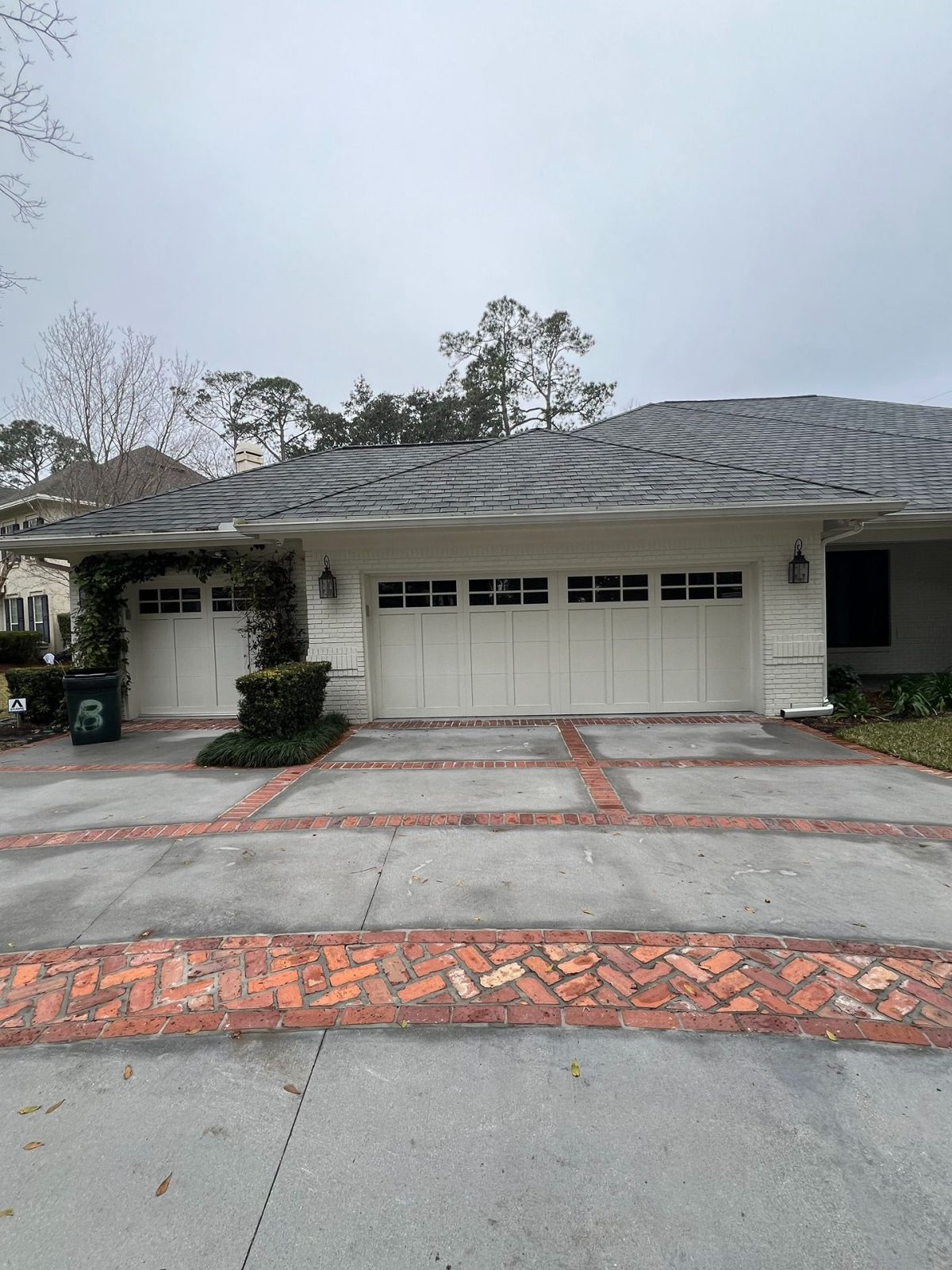
The storm has passed, the power is back, and your garage door now sits a few inches higher on one side. You need to secure the house, but one push of the wall button could turn a repairable problem into bent track, torn hardware, or a falling door.
We’re America’s Garage Doors, a garage door company based in Jacksonville Beach, Florida. The short answer is that isolated cosmetic or replaceable component damage can often be repaired, while a distorted door system, damaged opening, uncertain wind performance, or repeated failures can make replacement the safer and more sensible choice.
The decision is not based on one dent. It depends on whether the door can still travel safely, whether its load-carrying parts remain aligned, whether water or debris reached the opener, and whether a repair can preserve the door’s intended wind performance.
Start With the Safety Decision, Not the Price Decision
Stay clear of the opening and look from a safe distance before touching a control. NOAA warns that hazards remain after a storm and recommends checking damaged buildings for loose power lines, structural damage, sharp debris, shifting, and unusual noises before cleanup begins (NOAA, Use Caution After Storms).
If a power line is down nearby, water has reached electrical equipment, the garage opening has shifted, or the structure is making unusual noises, do not enter to test the door. Follow emergency and utility guidance first.
If the door is crooked, heavy, off its tracks, hanging from hardware, or no longer balanced, the answer to “Can I try it once?” is exact: No. Stop using the door.
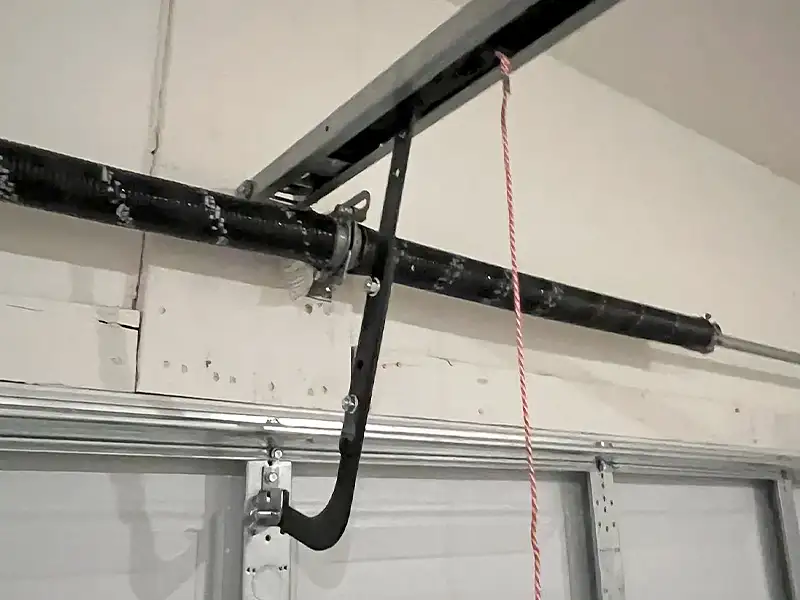
The same hard stop applies when a spring, cable, or drum appears damaged or displaced.
A storm can create more than one failure at once. A dented section may be obvious from the driveway while a pulled track fastener, stretched cable, damaged jamb, or wet opener remains hidden.
The U.S. Consumer Product Safety Commission says a severely unbalanced door can unexpectedly crash to the floor and that a door that is not balanced, binds, or sticks should be serviced by a professional (CPSC Garage Door Safety Guidance). That is why a post-storm inspection starts with stability and alignment rather than repeated opener tests.
Repair Makes Sense When the Damage Is Limited and the System Is Sound
Repair is usually the better decision when the damage is confined to serviceable parts and the door’s overall structure, track alignment, opening, and safe operation remain intact. A technician still needs to confirm that the visible damage is the whole problem.
A replaceable roller, hinge, seal, or track fastener may not justify a new door. Limited surface damage to a section may also be repairable when the section is still available, the remaining sections are straight, the joints work correctly, and the repair does not compromise the assembly.
That last point matters after high wind. A garage door is not just a group of panels; it is an installed system that transfers pressure through sections, reinforcement, hinges, rollers, tracks, fasteners, and the surrounding opening.
Florida’s residential code includes specific design-load provisions for garage doors, and it separately addresses protection for glazed garage-door openings in windborne-debris regions (Florida Residential Code, Section R301). A repair should not casually remove reinforcement, substitute mismatched hardware, or change the system from the configuration on which its performance depends.
A professional garage door repair inspection should answer whether the door can return to safe operation without mixing incompatible parts or masking damage. If the answer is yes, repair avoids replacing serviceable material and gets the opening secured with less disruption.
Replacement Makes Sense When the Door Can No Longer Act as a System
Replacement becomes the stronger choice when multiple sections are creased, the door bows in or out, section joints have separated, tracks are distorted, attachments have pulled from the jamb, or matching structural parts are unavailable. Damage that changes the door’s geometry is different from a shallow cosmetic dent.
A full replacement may also make more sense after repeated repairs. Paying to straighten one part today and replace another damaged part next month is not a bargain if the remaining assembly is worn, corroded, mismatched, or no longer dependable.
Wind and wind-driven debris deserve special attention in Jacksonville because the garage door covers a large opening in the building envelope. FEMA explains that hurricane winds can turn landscaping materials into projectiles, that rain can enter through damaged doors and other openings, and that an opening as large as a garage door can create serious problems for the rest of the home (FEMA’s archived February 1, 2026 snapshot, “Tips to Prepare Your Home for Hurricane Season”).
NOAA similarly calls the garage door the home’s most vulnerable part and says it must be able to withstand hurricane-force winds (NOAA, Prepare Before Hurricane Season). Those statements do not mean every dent requires a new door; they explain why structural deformation and uncertain wind performance should not be treated as cosmetic.
When replacement is appropriate, the product and installation have to fit the actual opening and site conditions. The Florida Building Code Online product-approval search identifies the applicable code version and lets users review items such as design pressures, impact resistance, and approval for use inside or outside the High-Velocity Hurricane Zone (Florida Building Code Online Product Approval).
A product listing is not a universal permission slip. The required door, pressure rating, impact protection, anchorage, documentation, and permit path can depend on the address, building, exposure, opening size, local jurisdiction, and approved installation instructions.
That is why garage door replacement should begin with the opening and approval documentation, not just a color and panel design. Proper garage door installation also includes the tracks, attachments, reinforcement, and configuration specified for that system.
A Storm Repair Does Not Automatically Trigger Whole-Door Replacement
Florida code should be discussed carefully here. The 2023 Florida Building Code, Existing Building, Eighth Edition defines repairs to include patching, restoration, or replacement of damaged materials and components for the purpose of keeping them in good or sound condition under existing loads or performance requirements (Florida Existing Building Code, Chapter 4).
That chapter says repair work must not make the building less conforming than it was before the repair. It also allows like materials in repairs when otherwise permitted and when they do not create a dangerous or unsafe condition.
For damage that is less than “substantial structural damage,” the code says damaged structural elements may be restored to their predamage condition. More extensive structural damage has separate evaluation and rehabilitation rules, including rules for damage caused by wind.
Those provisions do not create a blanket rule that every storm-damaged garage door must be replaced. They also do not guarantee that every damaged door may be patched; the scope of work, condition of the opening, product configuration, permit requirements, and local code official’s determination still matter.
A simple service repair and a complete hurricane garage door replacement are different scopes. Before work begins, ask what is being repaired, what approval or installation document applies, whether a permit is required, and whether the proposed work preserves or establishes the required performance for that address.
Separate Door Damage From Opening and Opener Damage
A door can be repairable while the supporting opening needs attention, or the opening can be sound while the door itself is beyond repair. The jambs, header, track supports, anchors, and nearby wall should be inspected for cracking, movement, pulled fasteners, and water intrusion.
Do not ask a garage-door component to hide a building problem. If the framed or masonry opening has shifted, the building condition needs the appropriate evaluation before the door is operated or replaced.
The opener is another separate decision. If water reached the motor housing, outlet, controls, wiring, or battery system, do not energize it and do not attempt electrical or logic-board work yourself.
A new opener cannot make a damaged door safe. The door must first be mechanically sound, balanced, aligned, and able to operate as intended; only then should the opener and its safety functions be evaluated.
If the door is stable and a technician has cleared it for normal use, ongoing garage door maintenance can address lubrication, fasteners, seals, balance, travel, and safety checks after the immediate storm repair. Maintenance is prevention, not a substitute for correcting storm damage.
Compare Cost by Scope, Remaining Life, and Risk
There is no honest one-price answer for garage door repair after a storm. For broad U.S. market context, HomeAdvisor reports a typical garage-door repair range of $155 to $379 and a typical replacement range of $754 to $1,707 (HomeAdvisor Repair Cost Guide; HomeAdvisor Replacement Cost Guide).
Those are national planning ranges, not America’s Garage Doors prices or Jacksonville quotes, and storm work can fall outside them. The cost can change with door size and material, number of damaged sections, track and hardware damage, opener exposure, section availability, wind-load documentation, impact-rated glazing, labor, permits, disposal, and damage to the supporting opening.
A limited component repair generally has a lower upfront cost than a complete replacement. That comparison stops being useful when the quote omits damage that will still leave the door crooked, unreliable, unsupported by compatible parts, or unable to meet the intended installation configuration.
Ask for a written scope that separates door work, opener work, structural-opening work, permit costs, and optional upgrades. The lowest line item is not the lowest total cost if another visit or a second major repair is already visible.
Insurance should be kept separate from the mechanical decision. Photograph the outside and inside of the door from a safe location, preserve pre-storm photos and product labels if available, note when the damage occurred, and ask your insurer what documentation it requires before permanent work begins.
Do not delay temporary security or a safety response just to collect a better photo. Communication is key, and the door company, insurer, and building department may each need different information.
What a Useful Post-Storm Inspection Should Tell You
A good inspection should leave you with a decision you can understand. It should identify whether the door is safe to operate, what failed, whether the opening and tracks remain aligned, whether replacement parts are compatible, and whether the repair preserves the assembly’s intended configuration.
If replacement is recommended, the explanation should connect that recommendation to actual damage or compliance needs. It should not rely on fear, and it should not claim that Florida law forces replacement when the code and local determination do not support that conclusion.
Frequently Asked Questions
Can a Dented Garage Door Be Repaired After a Storm?
Sometimes. A shallow dent may be repairable if the section joints, reinforcement, tracks, hardware, and safe movement remain intact, but creasing or bowing across several sections can indicate system-level damage.
Should I Open My Garage Door to Check the Damage?
If the door is crooked, heavy, unbalanced, off-track, binding, or associated with damaged springs, cables, or drums: No. Stop using the door. If electrical components are wet, leave them de-energized and arrange an inspection rather than testing them.
Does Florida Code Require Every Storm-Damaged Door to Be Replaced?
No blanket rule in the cited repair chapter says every damaged garage door must be replaced. The correct scope depends on the damage, whether the work can avoid an unsafe condition or reduced conformance, the product and installation details, local permitting, and the code official’s decision.
Do I Need a Wind-Rated Replacement Door in Jacksonville?
A replacement must satisfy the requirements that apply to the specific property and opening. Wind design, potential windborne-debris protection, opening size, exposure, product approval, and installation details should be checked for the address rather than assumed from a citywide sales claim.
How Much Does Storm-Damage Repair or Replacement Cost?
For broad U.S. market context, HomeAdvisor reports typical ranges of $155 to $379 for repair and $754 to $1,707 for replacement. Those figures are not America’s Garage Doors prices or Jacksonville quotes; parts availability, section and track damage, opener condition, approved configuration, permits, impact glazing, labor, disposal, and opening repairs can move the actual total.
Will Homeowners Insurance Pay for the Garage Door?
Coverage depends on the policy, cause of loss, deductible, exclusions, and documentation. Contact the insurer promptly, ask what it needs before permanent repairs, and avoid promising coverage or choosing an unsafe repair solely to fit an early estimate.
Can I Replace One Section Instead of the Whole Door?
Possibly, when a compatible section is available and the remaining door, reinforcement, hardware, tracks, and opening are sound. If the section cannot match the tested or approved assembly, or if damage extends beyond that panel, complete replacement may be the better path.
Get a Clear Repair-or-Replace Answer
If you have a storm-damaged garage door in Jacksonville or the surrounding service area, America’s Garage Doors can inspect the system and explain the repair or replacement scope. Call [(904) 241-5777](tel:+19042415777); a person answers, and you receive the price before the work starts.
The goal is to keep you well-informed, secure the opening, and recommend only the work the condition actually calls for. Storm damage is stressful enough without vague language or a replacement claim that has not been earned.