In most cases, no. A garage door opener installation does not automatically require a new door. The existing door can stay as long as it is structurally sound, properly balanced, and compatible with the opener being installed. But there are specific conditions where replacing both at the same time is the smarter long-term decision, and a homeowner who skips that evaluation can end up with a new opener on a door that shortens its life from day one. This post walks through exactly how to tell which situation you are in.
How a Garage Door Opener and the Door Work Together
Before getting into whether the door needs to be replaced, it helps to understand why the opener and the door are not independent products. They are a system.
The opener motor has a rated capacity matched to the weight of the door it drives. The drive mechanism, whether chain, belt, screw, or wall mount, connects to the door through a trolley and rail assembly mounted above the opening. The safety sensors sit at floor level on either side and stop the door if anything breaks the beam during travel. The force settings, travel limits, and sensor alignment in the opener are all calibrated to the specific door it is paired with.
When a door and opener are set up together from day one, every component is dialed in to work with every other. Swapping one while leaving the other in place means the new component inherits whatever condition the existing one was in. An opener installed on an out-of-balance door will compensate for that imbalance on every cycle. A door hung under an opener calibrated to a different door weight will run incorrectly until the opener is recalibrated.
This is why the assessment step before a garage door opener installation matters as much as the installation itself.
When You Can Keep Your Existing Door
Most homeowners scheduling a garage door opener installation are replacing an opener that has worn out while the door itself is in good condition. In that situation, keeping the door open is the right call. Four conditions need to be met.
The door is structurally sound
The panels are in good condition, with no bent struts, significant rust-through, or racking from a past impact. A structurally compromised door puts abnormal load on the opener from the first cycle because it is not moving cleanly through its travel path.
The door is balanced
A door that holds position when lifted halfway by hand and released without rising or dropping is balanced. An out-of-balance door puts uneven load on the opener motor on every cycle. That extra work wears the motor and strips the gears ahead of when they should fail. If the door is not balanced, the spring system needs attention before the opener goes in.
The door is the right weight for the opener being installed
Opener motors are rated for specific weight ranges. A motor that is underpowered for the door strains on every cycle. Confirming the weight match before ordering prevents a mismatch that shows up on installation day.
The door is compatible with the drive type being installed
A wall-mount opener requires a torsion spring system and a rigid top section for the mounting bracket. Not every existing door meets those requirements. A standard rail-mounted opener has different clearance requirements. Confirming compatibility before ordering prevents a situation where the opener arrives and the installation cannot proceed as planned.
If all four conditions are met, the existing door stays and the opener installation moves forward.
When Replacing Both at the Same Time Makes Sense
Keeping the existing door under a new opener is sometimes technically possible but not the right long-term decision. These are the situations where replacing both together is the smarter call.
The door is near the end of its useful life. If the door is already showing real signs of wear, panels that no longer match, hardware that is corroded, springs that have been replaced multiple times, installing a new opener on it means the opener will likely outlast the door and need reinstalling when the door finally goes. Doing both at once is more cost-effective and less disruptive over time.
The door needs significant work before the opener can go in. An out-of-balance door that needs spring work before the installation is viable adds cost and time to the project. If the door also needs other repairs on top of that, the combined cost of bringing the door up to standard and then adding the opener starts to approach the cost of replacing the door and starting with a fresh system.
The door is not compatible with the opener type the homeowner wants
If the homeowner wants a wall-mount opener and the existing door does not have a torsion spring system or the right top section, modification or door replacement becomes part of the conversation.
The existing door is not a standard size
This comes up more often on older homes where the original door was custom-sized to a non-standard opening. Non-standard doors limit which openers will fit and function correctly.
The Balance Test and Why It Matters Before Any Opener Installation
The most important check before a garage door opener installation has nothing to do with the opener itself. It is the balance test on the existing door.
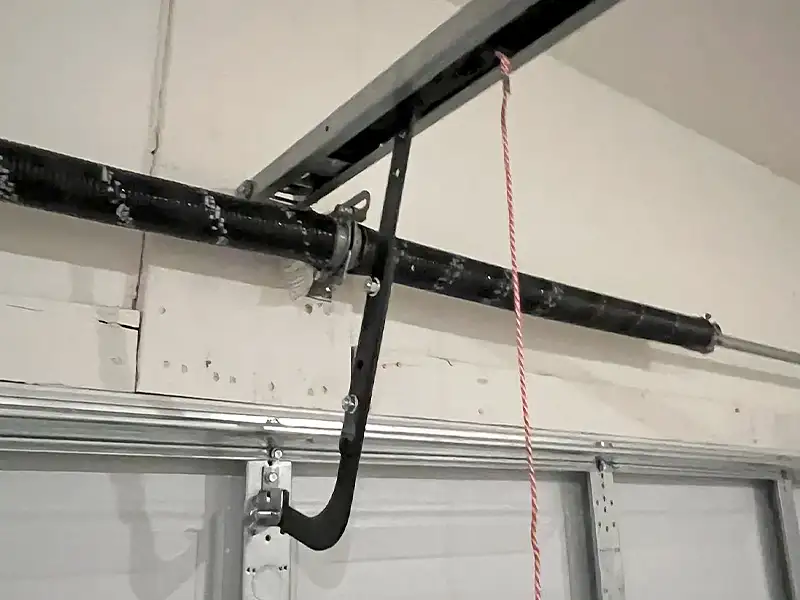
Disconnect the opener using the emergency release cord. With the door fully closed, lift it by hand to about waist height and let go. A properly balanced door holds its position without rising or dropping. A door that drops is spring-tension-deficient. A door that rises has too much spring tension. Either condition means the spring system needs professional attention before any opener goes in.
An opener installed on an out-of-balance door has to compensate for that imbalance on every open and close cycle. That compensation puts extra load on the motor and the drive mechanism. Over time the gears wear faster, the motor runs hotter, and the opener fails before it should. What looks like an opener problem is often a door balance problem that wore the opener out.
Torsion springs are under serious tension and should never be adjusted, wound, or touched without proper winding bars and training. If the balance test reveals an issue, a tech needs to address the springs before the opener installation proceeds. The observation steps above are safe for any homeowner to perform. Any adjustment to the spring system is not.
What the Assessment Looks Like Before a Garage Door Opener Installation
A professional assessment before a garage door opener installation covers the full door system, not just the opener.
Door condition is assessed first, including panel integrity, structural soundness, and whether any damage affects how the door travels through the opening. The spring system gets checked for tension and balance. The existing wiring from the wall button and the outlet in the ceiling gets confirmed for compatibility with the new unit.
Header clearance above the door determines whether a standard rail will fit or whether a low-clearance kit is needed. The height of the door affects the rail length required. The top panel needs to be rigid enough to accept the trolley attachment bracket without flexing.
Once the assessment is done, the tech walks the homeowner through what the installation involves and what it costs before any work starts. If the existing door is a good candidate, the conversation focuses on the opener. If the door has issues, those get laid out clearly before anything is ordered. The homeowner decides with complete information.
When the Opener and Door Go In Together
When a door and opener are being replaced at the same time, the sequence matters. The door goes in first.
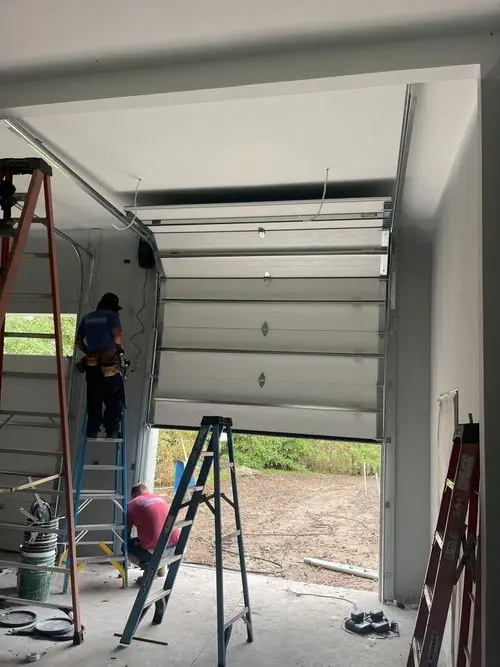
Panels are assembled and hung in the opening. Tracks are set, springs are wound to match the door weight, and the door gets balanced by hand before the opener is mounted. A balanced door on its own is the foundation for a properly functioning opener. Installing the opener before the door is balanced means calibrating it to a condition that still needs correction.
Once the door is balanced and traveling correctly on its own, the opener gets mounted. The rail is positioned, the trolley connected to the door, and the safety sensors placed and aligned at floor level on either side. The opener is programmed, remotes and keypads are paired, and the full system runs through a complete open and close cycle before the job is called.
This sequence is why doing both at the same time produces a better outcome. The opener is calibrated to a balanced, properly installed door from day one.
If you are planning a garage door opener installation and want someone to assess the full system before anything is ordered, America’s Garage Doors handles opener installation and replacement across Jacksonville and surrounding areas. Call and a person picks up. The assessment happens before any work is scheduled, and the price is given before anything starts.