It is 7:10 on a wet Jacksonville morning, you are already late, and the garage door drops almost to the floor before jumping back up. The fastest response is not to keep pressing the remote or turn up the opener’s force; it is to identify whether the problem is a harmless obstruction, a safety-sensor issue, a travel-setting problem, or a dangerous door-hardware failure.
We are America’s Garage Doors, a garage door service company based in Jacksonville Beach, Florida. This guide explains the safe checks you can make before requesting garage door repair in Jacksonville, along with the signs that mean you should stop immediately.
A door that reverses before closing is often responding to a safety input or resistance. A door that stops with the bottom seal hovering above the floor may instead have an incorrect close limit, binding hardware, or a door balance problem. The symptom looks similar from the driveway, but the next move is different.
Start With This Safety Check
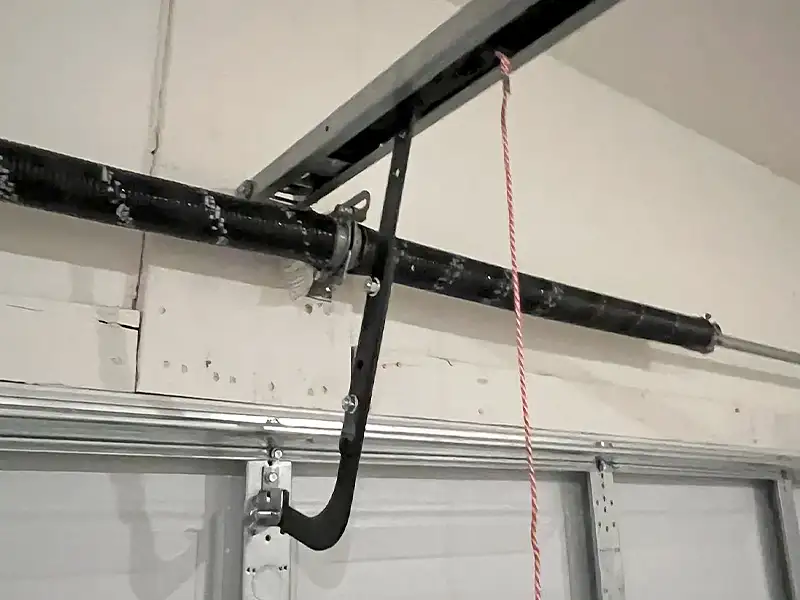
Stand inside the garage with the door fully open and look at the springs, lift cables, drums, tracks, rollers, hinges, and door sections without touching or adjusting them. Do not walk or reach beneath a moving or partially open door, and keep children, pets, vehicles, and stored items away from the opening.
If you see a broken spring, loose or frayed cable, cable off a drum, bent track, hanging roller, cracked bracket, or a door that sits crooked, looks unusually heavy, or appears unbalanced: No. Stop using the door. The Genie belt and chain drive opener manual warns that springs and connected cables and brackets are under high tension and says repairs must be made by a trained service representative.
Do not pull the emergency release on a visibly damaged, crooked, heavy, or unbalanced door. Do not remove the opener cover, touch internal wiring, adjust a logic board, or try to compensate for a damaged door by increasing force.
Image Direction: Photograph a real residential garage door from inside the garage, showing both lower photo-eye sensors and the full doorway in one frame. Add simple labels for “clear doorway,” “sensor lens,” and “do not touch spring or cable,” without staging a person beneath the door.
1. Check the Doorway and Floor
Look across the full width of the threshold. A trash-can wheel, garden-hose loop, broom handle, pebble, pine cone, or folded edge of the bottom seal can interrupt closing or create enough resistance for the opener to stop and reverse.
Move only loose objects that are clearly in the doorway. Then inspect the vertical tracks from a safe distance for debris, but do not put your fingers into the track or try to straighten it.
Pay attention to the exact point where the door changes direction. If it reverses at the same height every time, note that height for the technician; if it behaves differently from one cycle to the next, a shifting obstruction, intermittent sensor signal, or mechanical bind may be involved.
Jacksonville’s wind-driven rain can carry sand, leaves, and grit toward a garage threshold. That local detail matters because a small object in the closing path can turn an occasional nuisance into a repeatable failure.
2. Clean the Photo-Eye Sensor Lenses
Most modern residential openers use two photo-eye sensors mounted near the floor, one on each side of the opening. Their job is to monitor the closing path, so a blocked beam can keep the door from closing normally.
With the door fully open and stationary, wipe each lens gently with a clean, soft, dry cloth. Remove cobwebs, dust, leaves, or water droplets around the lens, but do not loosen wires, open the sensor housing, or use a wet cleaner on electrical parts.
The Genie owner’s manual directs owners to clean dirt and debris from the lenses and check sensor wiring for loose connections, cracks, or worn insulation as part of a monthly visual check. If wiring looks damaged, leave it alone and arrange service.
3. Look for Sensor Misalignment or Interference
A garage door sensor problem is not always dirt. A bumped bracket, vibration, a storage bin leaning against the sensor, or direct sunlight at the receiving eye can interrupt the beam even when the doorway looks empty.
Check whether both sensors appear to face one another at the same height. You may gently move a loose storage item away from a bracket, but do not bend the bracket, splice wires, swap sensors between brands, or defeat the safety system.
Indicator-light meanings vary by brand and model, so use the manual for the opener actually installed above your door. On the cited Genie family of openers, steady red and green sensor lights indicate normal operation, while the diagnostic guidance connects blinking or missing lights with obstruction, misalignment, wiring trouble, interference, or a defective sensor.
The same Genie manual notes that direct sunlight can interfere with the receiving sensor. If the failure happens mainly at one time of day, tell the technician which sensor is sunlit and when; that pattern is more useful than repeatedly cycling the door.
Do not bypass a sensor or force the door closed through a failed safety check. The Door & Access Systems Manufacturers Association’s opener safety guidance says the door should remain in sight while it moves and recommends following the manufacturer’s instructions for the specific system.
Image Direction: Use a close, level photograph of the actual installed sensor pair with both indicator lights visible. The image should show the beam path and mounting brackets but no hands touching wires or hardware.
4. Watch for Binding, Damage, or a Crooked Door
If the sensors appear clear but the garage door reverses before closing, watch the edges of the door from outside the travel path during one normal cycle. Look for a roller hesitating, a section rubbing, a bottom seal catching, or one side descending faster than the other.
Do not run the door repeatedly to diagnose a bind. Repeated cycles can place more load on the opener while leaving the underlying track, roller, hinge, spring, or cable problem unresolved.
A crooked door, a visible cable problem, a broken spring, or a door that appears heavy or unbalanced reaches the same answer: No. Stop using the door. America’s Garage Doors has a dedicated garage door spring service because tensioned hardware is not a homeowner adjustment.
The CPSC garage-door safety alert says an unbalanced door can fall unexpectedly and advises professional service when a door is unbalanced, binding, or sticking. That is why this check is visual only when the system is already failing.
5. Consider the Close-Travel Limit
The close-travel limit tells the opener where the fully closed position is. If it is set too short, the opener may stop while the bottom seal is still above the floor; if it is set incorrectly in the other direction, the door may press into the floor and reverse.
Travel programming is model-specific. The Genie manual identifies improperly set limits as one possible cause when a door starts down, stops, and returns upward, but it also tells the reader to check the safety beam and door for binding.
That order matters. Do not change a limit simply because the door will not close; first rule out a blocked opening, a failed sensor check, and visible mechanical damage, then consult the exact owner’s manual or schedule garage door opener service.
If the symptom began after an opener installation, power event, repair, or door impact, share that history when you call. It can help separate a programming issue from a door problem.
6. Do Not Use Force as a Shortcut
More closing force is not a general fix for a door that stops or reverses. The cited Genie manual says never to adjust force to compensate for an unbalanced door, binding track, or broken spring.
Excess force can also undermine the purpose of the contact-reversal system. If the opener’s limits or force have been changed, the manufacturer directs the owner to repeat the contact-reversal test.
Leave electrical, internal opener, and logic-board diagnosis to a qualified service provider. Removing the opener cover can expose electrical hazards and moving components, and a guessed adjustment can hide the condition that caused the reversal.
7. Test Contact Reversal Only After the Door Passes Inspection
Run this test only if the visual inspection found no broken spring, cable damage, crooked door, heavy door, unbalanced door, unstable hardware, or other mechanical warning. The CPSC safety alert instructs homeowners to test the opener with a 2-by-4 laid flat in the door’s path.
Open the door fully. Place a standard 2-by-4 flat on the floor at the center of the doorway, stand clear with the opening in view, and use one normal press of the wall control to close the door.
The door should contact the board and reverse. Genie specifies reversal within two seconds to the fully open position for the cited opener family, while CPSC says an opener that does not properly reverse should be disengaged from automatic use until it is adjusted according to its manual, repaired, or replaced.
If the door fails, stop automatic use and arrange service. Do not increase force to make it pass, and do not continue operating the door as if the failed test were only an inconvenience.
What the Symptom Usually Tells You
A door that will not begin closing and shows a sensor warning points first toward the beam, lens, alignment, wiring, or model-specific safety input. A door that descends and reverses at a consistent point may be encountering an obstruction, a bind, an incorrect limit, or an opener setting that needs diagnosis.
A door that rests evenly but leaves a small gap can have a travel or seal issue. A door that leaves an uneven gap, twists, jerks, makes a sharp new noise, or shows cable or spring trouble is a mechanical safety problem, not a sensor-cleaning project.
A technician should diagnose the door and opener as a system. Replacing a sensor will not correct a binding door, and changing a limit will not repair a broken spring.
What Garage Door Repair May Cost
There is no responsible single company price for this symptom because “will not close” describes several different repairs. For broad market context only, Fixr’s fetched national guide places garage door repairs between $150 and $350 and lists sensor realignment around $100. Those figures are not a Jacksonville quote, and opener or tensioned-hardware work can involve a different scope.
The service call should identify the failed component before you approve work. America’s Garage Doors’ stated approach is “Price before the work starts,” which lets you evaluate the actual repair instead of relying on a broad online estimate that may not fit your door, opener, parts, or damage.
Ask whether the quote addresses the cause as well as the symptom. If a provider proposes more force without checking the door, sensors, limits, and reversal behavior, that is not the careful diagnosis this problem deserves.
When to Call for Garage Door Repair in Jacksonville, FL
Call promptly when the safety test fails, sensor lights remain abnormal after a gentle cleaning, visible wiring is damaged, the door binds, the problem returns, or you cannot identify the installed opener’s exact manual. Stop immediately for any broken spring, cable trouble, crooked door, heavy door, or unbalanced door.
“Communication is key.” Tell the dispatcher where the door stops, whether it reverses, what the sensor lights do, whether the issue changes with sunlight or rain, and whether anything happened just before it began.
America’s Garage Doors serves Jacksonville and surrounding communities, with same-day service in most cases and 24/7 emergency availability. Call (904) 241-5777; a person answers, keeps you informed, and gives you the price before work starts.
Frequently Asked Questions
Why Does My Garage Door Go Down and Then Back Up?
The opener may be responding to an obstruction, an interrupted or misaligned photo-eye beam, mechanical resistance, an incorrect close limit, or another model-specific fault. Clear the doorway and inspect the sensors first, but stop if the door is crooked, heavy, unbalanced, or shows spring or cable damage.
Can Sunlight Keep a Garage Door From Closing?
Yes, direct sunlight can interfere with the receiving photo eye on some systems. The Genie manual specifically identifies sunlight interference as a possible cause; note the time of day and which sensor is illuminated so the system can be checked without bypassing it.
Can I Close the Door With a Bad Sensor?
Do not bypass a safety sensor or use an override as a routine workaround. Keep people and objects away from the opening, stop automatic use if the system fails its safety checks, and follow the exact manufacturer manual or arrange service.
Should I Adjust the Garage Door Opener’s Force?
Not as a first response. Manufacturer guidance warns against using force adjustments to compensate for a binding track, unbalanced door, or broken spring, and electrical or internal opener work is not a DIY task.
What If the Garage Door Is Crooked or One Cable Is Loose?
No. Stop using the door. Do not pull the emergency release, touch the cable, or attempt to level the door; tensioned hardware and an unstable door require professional service.
How Often Should I Test the Auto-Reverse Feature?
CPSC and the cited Genie manual call for a monthly contact-reversal test. Test only after a visual inspection shows no dangerous mechanical condition, use a 2-by-4 laid flat at the center of the doorway, and stop automatic use if the door does not reverse properly.
How Much Does It Cost to Fix a Garage Door That Will Not Close?
Cost depends on whether the cause is sensor alignment, damaged wiring, travel programming, binding hardware, a spring or cable problem, or opener failure. A diagnosis and scope-specific price are more useful than one broad online range; America’s Garage Doors gives the price before work starts.